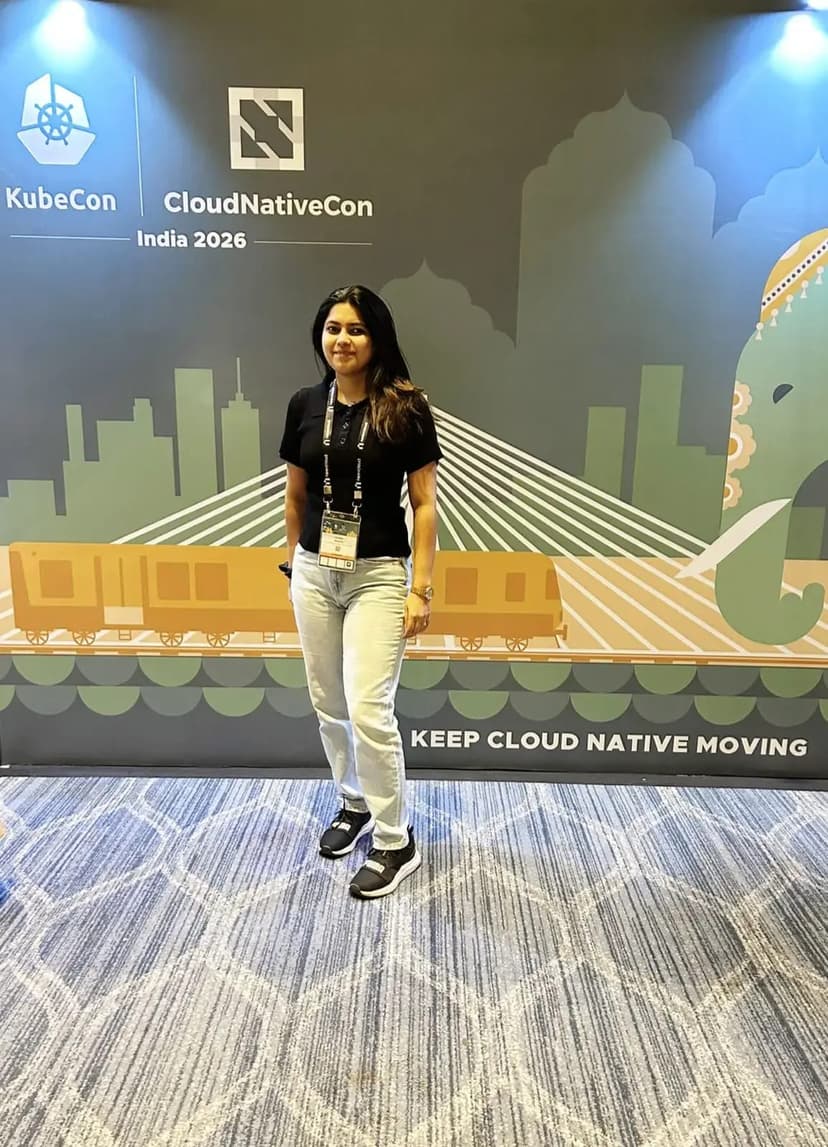
When I joined CloudRaft as an HR a year ago, I couldn't have told you what a Kubernetes pod was if my life depended on it. Yet here I stood at KubeCon India 2026 — badge clipped to my jacket, notebook in hand—in a room full of CTOs, CNCF architects, and engineers who spoke about Kubernetes the way sports fans debate cricket. I'd gone from handling onboarding spreadsheets to navigating one of the world's largest cloud-native conferences, and it wasn't a mistake. It was proof of something I'd come to understand only recently: a company's culture doesn't just shape how you work—it shapes where you go and who you become. I wanted to share my experience at KubeCon and how our company culture reflects in to the open source community and conferences like KubeCon.
The buzzwords that started it
The moment I joined CloudRaft, two words kept following me around the office: Kubernetes and CKA. I didn't fully get it at first, but I noticed something. The way our developers talked about KubeCon, it wasn't "just a conference" It was closer to a pilgrimage.
Some of our team members had already been to previous KubeCons in Hyderabad and New Delhi and came back buzzing. So when KubeCon India 2026 was announced, I didn't overthink it. I opened the registration page, got my early bird ticket, and just like that, an HR had somehow found her way into the world of Linux Foundation and CNCF. CloudRaft's culture has always inspired us to build our own goals and our own personal brand, not just do our jobs. This felt like the perfect place to test that out.
A culture that says "Go figure it out"
None of this would have happened at just any company.
CloudRaft runs on a flat hierarchy thus, there is no long chain of approvals between "I have an idea" and "let's try it".
You're handed ownership early, sometimes uncomfortably early and expected to run with it. Nobody is checking in every other day asking for status updates. That's not neglect, it's trust, the kind that assumes you'll ask for help if you need it and otherwise stays out of your way.
That's what high agency actually looks like day-to-day. Not a value on a slide, but a manager not micromanaging a project or a lead saying "you handle it" and meaning it. It's leadership that encourages you to build your own personal brand instead of just executing tasks quietly in the background. It's participation being expected, not requested.
So when KubeCon India 2026 came up, going wasn't really a big decision. It was just the natural next thing to do in a culture that already encourages you to show up, take initiative, and figure things out as you go.
Why even go?
Honestly, why not?
Where else do you get CEOs, CTOs, and engineers from across the industry sharing the same hallway, the same coffee queue, the same three days? All it takes is a "hi," a genuine question, and suddenly you're in a conversation that could shift your career.
In a remote-first organization like ours, events like KubeCon quietly solve a problem that Slack and Google Meet just can't. They bring distributed teams, clients, and prospects into the same room.
For a remote-first company, this matters more than it seems.
In just 2 days I met a few teammates I usually got to see only on video calls,had real conversations with existing clients, had business conversations with potential clients who were exploring cloud-native partners, met engineers and practitioners who could be great additions to our team down the line.
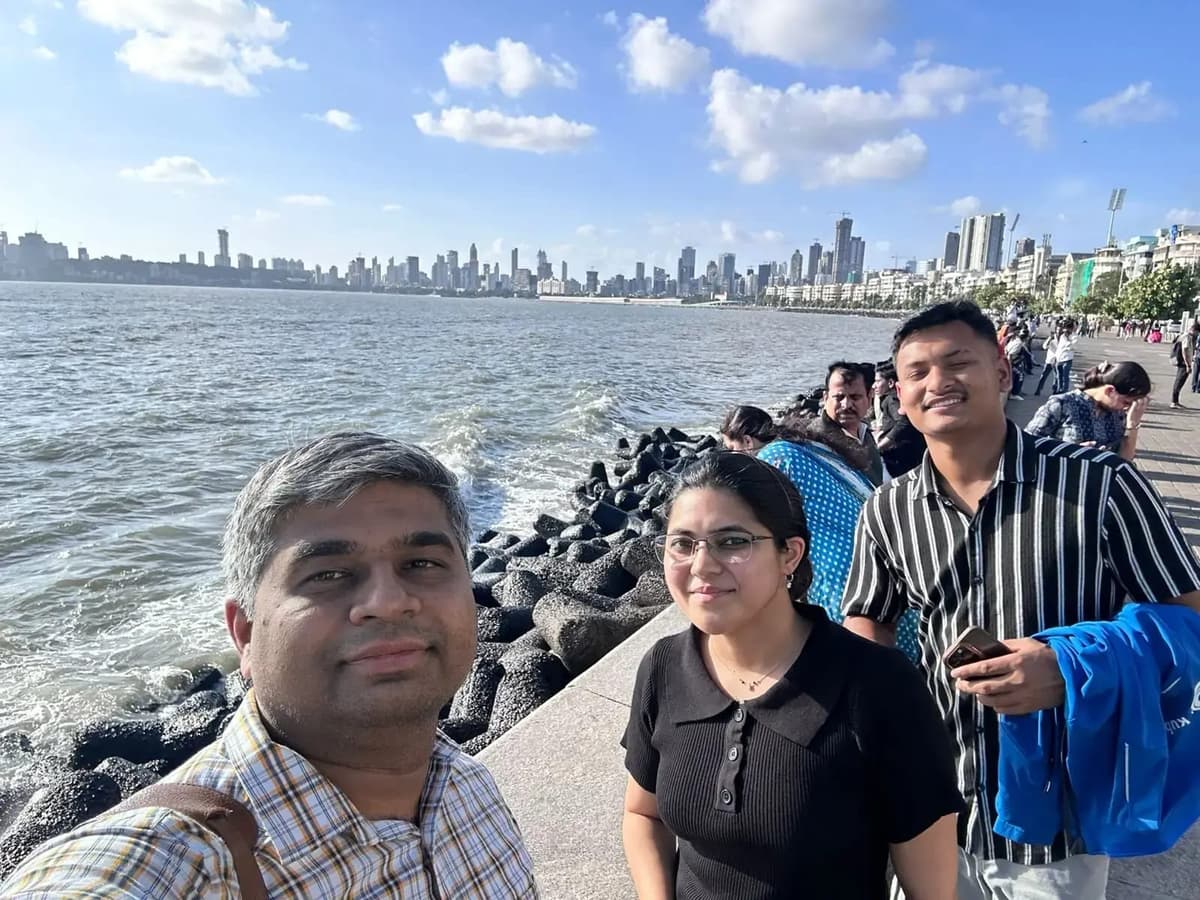
None of these are things a virtual meeting can do so effortlessly. Such conferences aren't just a learning expense for remote organizations, they're one of the few structured opportunities to turn distributed relationships into strong ones.
Attending the keynotes, I noticed something that stuck with me: many of the speakers were up there for the first time. Nervous, unpolished, real. And it hit me, the first step is always the hardest one. It's also the one that opens every door after it.
So I decided to take mine.
I won't lie, there was a small voice asking, "You're from HR, are you really going to fit in here?" I had to actively shut that voice down. And if I'm being fully honest, I wasn't at my sharpest during this first KubeCon. But I walked away with more self awareness than any workshop could have given me. Some lessons you only learn by being a little out of place.
The night before
The lead up was simple: register, wait a few months, then suddenly you're booking flights to Mumbai the city of dreams.
The night before the event, sitting in my hotel room with my iPad, I did something very on brand for a first timer walking into a completely different tech world. I opened ChatGPT and typed, "How to interact with engineers at KubeCon being an HR, give me a few intelligent points."
No shame in it. If you're stepping into unfamiliar territory, you do your homework. I wasn't nervous exactly, I just wanted to actually understand the people and the tech in that room, not just stand around smiling and nodding.

Jio World Convention Centre, BKC
The venue alone was worth the trip. If you ever get the chance, go check out what's reportedly the largest elevator in Asia, it's right there. The whole event ran with a kind of precision that made you forget how many moving parts a conference like this actually has.
Jasmine Hall: where it all started
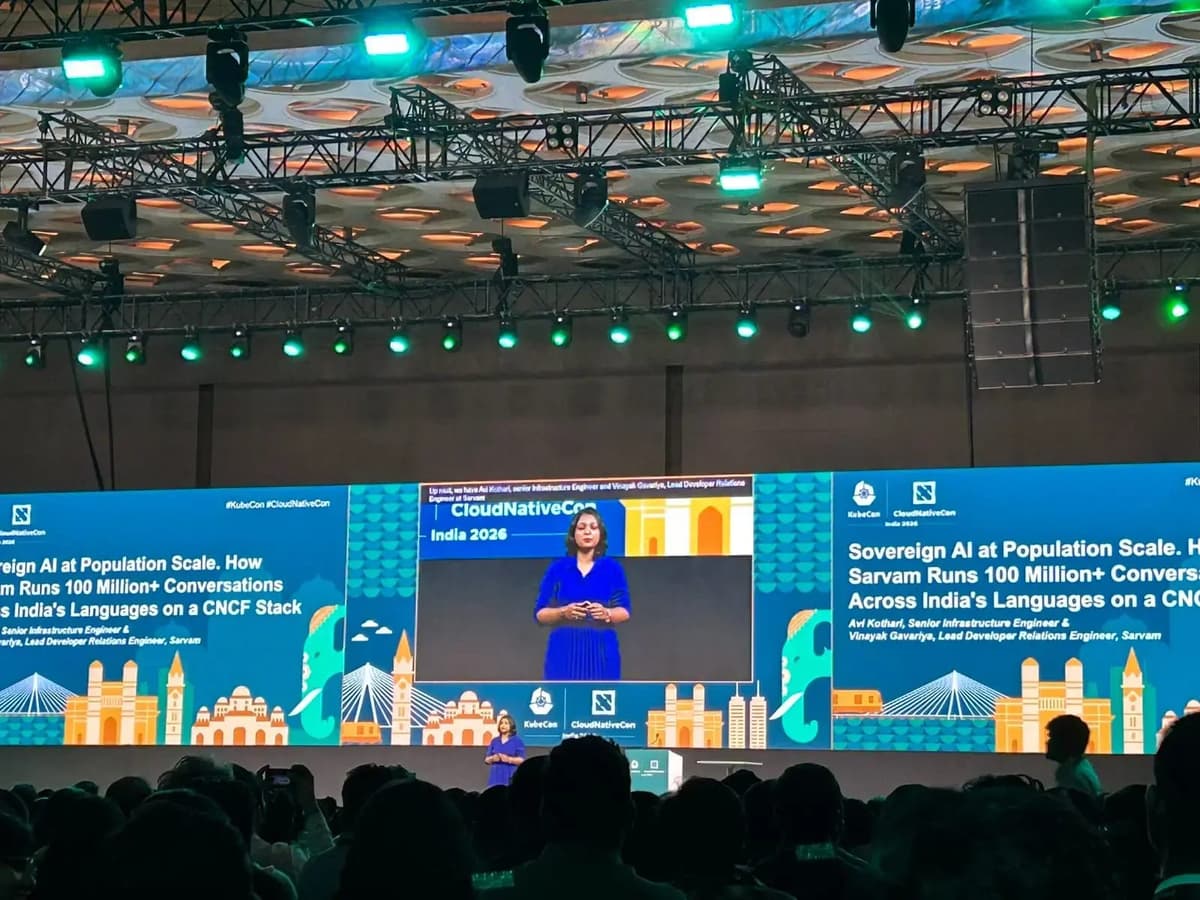
It all kicked off in Jasmine Hall 2, with Jonathan Bryce, Executive Director of the Linux Foundation, opening the show. The keynotes set the tone immediately: AI inference as the next big frontier, the real limitations the industry is still wrestling with, and no shortage of conversation around GPUs and where they fit into all of this.
Then came the line that will forever live in my memory of Day One:
"Breakfast has been laid and boom no one is in Jasmine Hall anymore."
Because let's be honest, free breakfast beats even the best keynote. The food coma set in fast, and concentration took a back seat for a bit. But you regroup. You start walking around, meeting people from different companies, different stacks, different levels of experience.
That's when I noticed a queue. A long one. Curious, I asked someone standing in it what was going on. Their answer: "Nothing, just collecting the goodies."
By Day Two, I wasn't surprised anymore,I was in the queue too. Not a newbie, just someone who understood swag lines are a universal language.
The conversations that actually mattered
Beyond the swag and the keynotes, the real value was in the conversations, with developers, CTOs, CEOs, and lead engineers, all at completely different stages of their journeys. It's rare to get that range of perspective in one room.
I had a bit of an unfair advantage here: I attended alongside my own company's CEO, which meant I was often sitting in on discussions about where different technologies are headed next.
Watching how two CEOs talk to each other is its own education, the language, the pace, the priorities. It's a completely different rhythm from how a CTO talks to an early career developer, or how a lead engineer explains something to someone just starting out. Business runs on these conversations, and business is what keeps this entire industry, and honestly the country, moving.
Women in Cloud Native
This one stayed with me the most.
Representation of women in STEM is still nowhere near where it should be, so seeing an entire room of women in cloud native, discussing technology, opportunities, and the challenges specific to being a woman in this space, genuinely moved me. It wasn't just a panel. It felt like a support system in real time.
It made me reflect on where we stand as an organization. At CloudRaft, women make up 40% of our tech workforce, in a space (Kubernetes, DevOps, SRE) where women are still significantly underrepresented industry-wide. We're proud of that number, but we also see it as a starting point, not a finish line. Representation in cloud-native isn't just a hiring metric, it's a signal of the kind of culture and community we want to keep building.
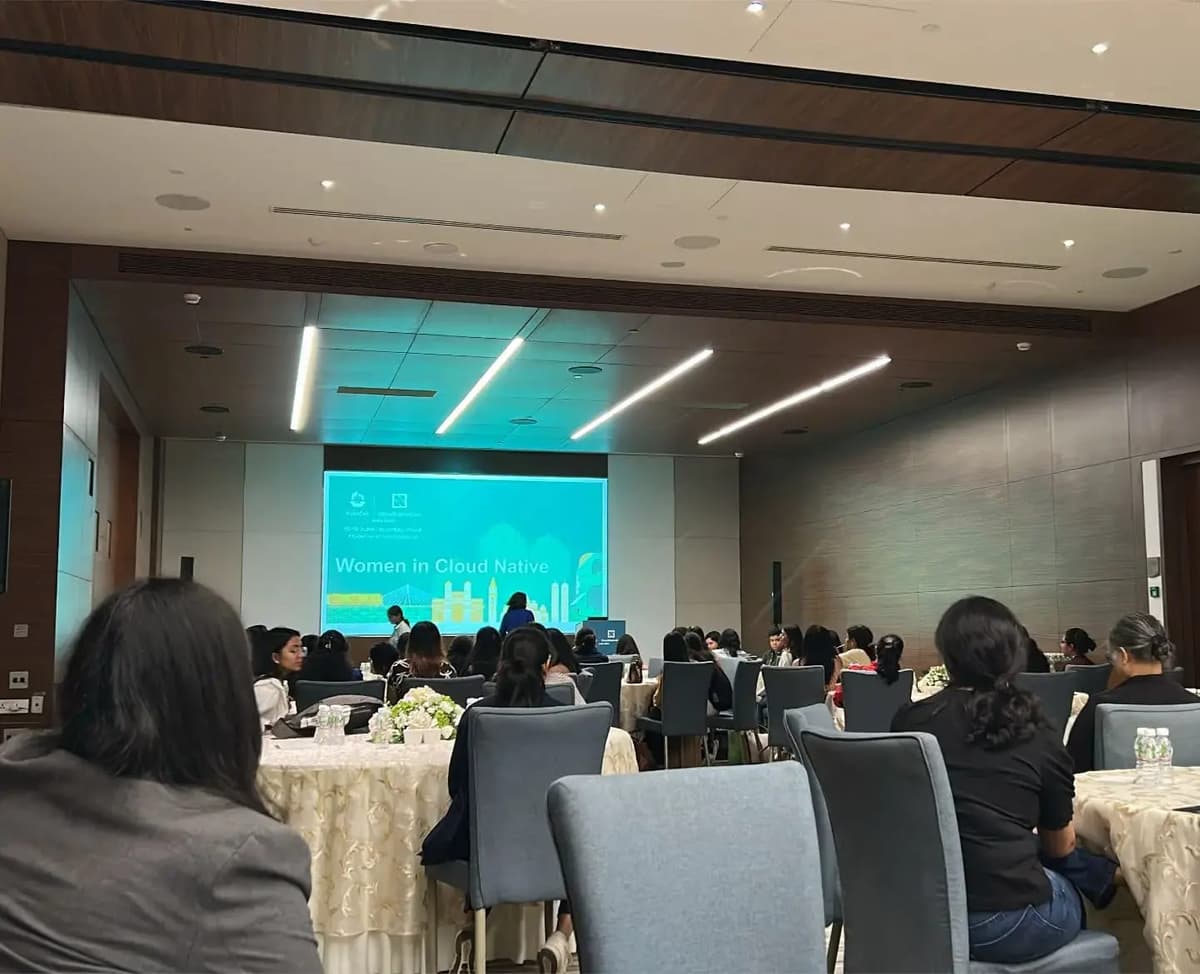
If you're a woman working anywhere in cloud native, this is a forum worth showing up for. Guidance, opportunity, and a healthy dose of competition, all in one room.
What I'm actually taking Home
Strip away the swag bags and the free coffee, and here's what stayed with me.
Not as a checklist of sessions attended,but as someone who thinks about people, hiring, and business growth for a living:
- Where the industry is actually headed, and where it's still stuck: Cloud-native isn't a niche anymore it's the default now and that shift is quietly rewriting job descriptions faster than most companies are updating them.
- Why GPUs are quietly becoming the center of every AI conversation: This now matters beyond infrastructure. When compute becomes the bottleneck, understanding systems, cost, and scale matters more than knowing any single framework.
- Skills matter more than tools: Nobody was hiring "a Kubernetes person" Companies are hiring people who can reason about distributed systems, debug under pressure, and adapt when the tool inevitably changes. Tools have a shelf life. The ability to learn the next one doesn't. Companies are now looking for skilled, high-agency, self-driven, initiative taking people.
- Culture is what makes that agency possible: You can't expect people to take ownership if the environment doesn't actually let them. Flat hierarchies, no micromanagement, leadership that encourages people to build their own brand instead of just their output that's not a nice-to-have anymore, it's becoming a competitive advantage in how companies attract and keep good people.
- Networking and personal branding matters and it is not just skill, it is a requirement of today: Having real conversations in the hallway, building networks, making your presence felt. That's not soft skill fluff. That's how opportunities actually move.
- The value of doing something that scares you a little: Stepping into a room where you don't fully belong yet is uncomfortable but it's also where you learn the most about how people outside your usual circle think, work, and solve problems.
- If there's one thread running through all of it, it's this: The future of hiring in tech isn't about finding people who know today's tools. It's about finding people who can learn tomorrow's and who show up, curious, even when they don't fully belong yet.
But if I had to pick just one takeaway from these two days in Mumbai, it would be:
-
There's always a first time. Every meaningful chapter starts with showing up somewhere you don't fully belong yet, and choosing to stay anyway.
-
If reading this made you nod along, if you care about open source, community, Kubernetes, and building things the right way we'd love to talk!
We are hiring
CloudRaft is hiring like-minded folks across SRE, Platform Engineering, DevOps, and Open Source Intern roles. If you're someone who shows up to communities like this not just to learn, but to contribute, let's connect.
📩 [email protected] or visit https://www.cloudraft.io/careers or drop a message to me on LinkedIn, I will read each of them.